
Congratulations everyone, you’ve made it through a fifth of the 21st Century already. The 2020s are here, and with this brand new decade come new challenges and technologies that will change the way we live. In the past, Digital Advice has celebrated the passing of each year by issuing predictions for the year ahead, but for this New Year’s, we peered into our crystal ball to imagine what the coming decade will bring.
While our predictions might seem lofty and perhaps even pulled from science fiction, they’re all based on technologies either already available or in development right now. It’s not a question of if these will come to fruition, but when. So what tech will change your life this decade? Let’s take a look.

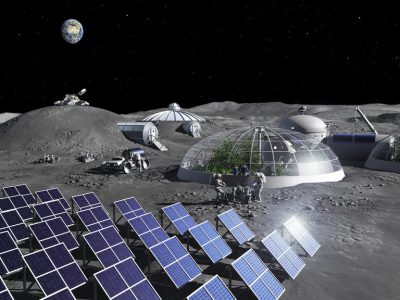
The 2020s will mark the return of humans to space missions beyond the Earth’s orbit. There is the possibility that humans might not only set foot on the moon but also on Mars within the next decade. Of the two, a return to the moon is far more likely — with humans establishing a permanent lunar settlement by the end of the decade.
NASA currently targets 2024 for the Artemis III mission that will put humans back on the lunar surface and a permanent settlement by 2028. However, humans could orbit the moon by the end of this year or early 2021. As for Mars, that’s much more difficult. While SpaceX has repeatedly stated it’s on target to put humans on Mars by the end of the decade, whether that’s even possible depends on the success of the company’s human-crewed lunar missions, which should happen in the mid-2020s. Regardless, humans are returning to space to stay this time. But it’s not just astronauts that will be in space anymore.

Virgin Galactic
The idea of space tourism is nothing new, and various companies have promised to make it a reality for about as long as humans have been in space. But in the 2020s, it will become a reality. Both Sir Richard Branson’s Virgin Galactic and the Jeff Bezos-backed Blue Origin will begin offering near-space flights in the early 2020s — but at a high price tag, somewhere in the range of $250,000 per person. SpaceX is targeting 2023 to fly Japanese billionaire Yusaku Maezawa and a group of artists around the moon. The cost is unknown, but Maezawa is likely paying millions (if not tens of millions) of dollars.
But Branson and Bezos have both publicly stated that they don’t want to limit spaceflight to the super-rich. And Elon Musk has also proposed plans for a system of rocket-based travel that could theoretically get you to any point in the world within an hour — all for the price of an economy airline ticket. While there’s reason to be skeptical of Musk’s proposal, it’s fairly likely that by the end of the decade a flight on a space-bound plane might cost little more than a first-class ticket.

The worldwide labor force will have a reckoning this decade. Technology is now at a point where many tasks can be performed faster and more efficiently by robots. With the dawn of AI, these robots can operate themselves, further eliminating the need for humans in the process. With self-driving cars and drones, the cargo transportation industry will also increasingly automate itself. During the 2020s, automation will become the rule, not the exception — potentially putting a quarter of current jobs at risk of elimination by 2030.
This apparently inevitable job apocalypse has even become a 2020 election year campaign issue, ask Andrew Yang. But Yang won’t be the last. Expect to hear a lot more about this in the years to come. Either way, we’ll have to figure out just how much automation we’re willing to accept, and what to do with the millions that will lose their jobs as a result. It’s not an easy problem to solve.

It seems like the automobile industry has been overselling the idea of electric cars for much of the 21st Century, and that’s pretty accurate. While the electric vehicle has been around for decades, it wasn’t until the 2010s that technology was able to produce an electric vehicle with a mass-market appeal — the Tesla. The company arguably sparked a massive push towards electrification, and likely so much so that by the end of the decade, an overwhelming majority of new cars sold will be all-electric.






Leave Comment